
What Alpena County Probate Records Cover
Probate is the court process for handling what a person leaves behind and for protecting people who cannot manage their own affairs. In Alpena County, the Probate Court hears decedent estates, will admissions, and trust matters. It also handles adult guardianship, conservatorship, and mental-health treatment proceedings. Each of these opens a case file, and each file becomes part of the county's probate record.
The court sits on the same downtown campus as the county's other courts, inside the County Annex Building on West Chisholm Street. Hon. Alan M. Curtis presides, and the office keeps its own docket apart from circuit and district cases. Because probate touches wills, money, and family health, staff treat many of these files with more care than a routine civil docket.
The county's official Probate Court page lists contact details, the court docket link, and subject guides for wills, trusts, and guardianship.
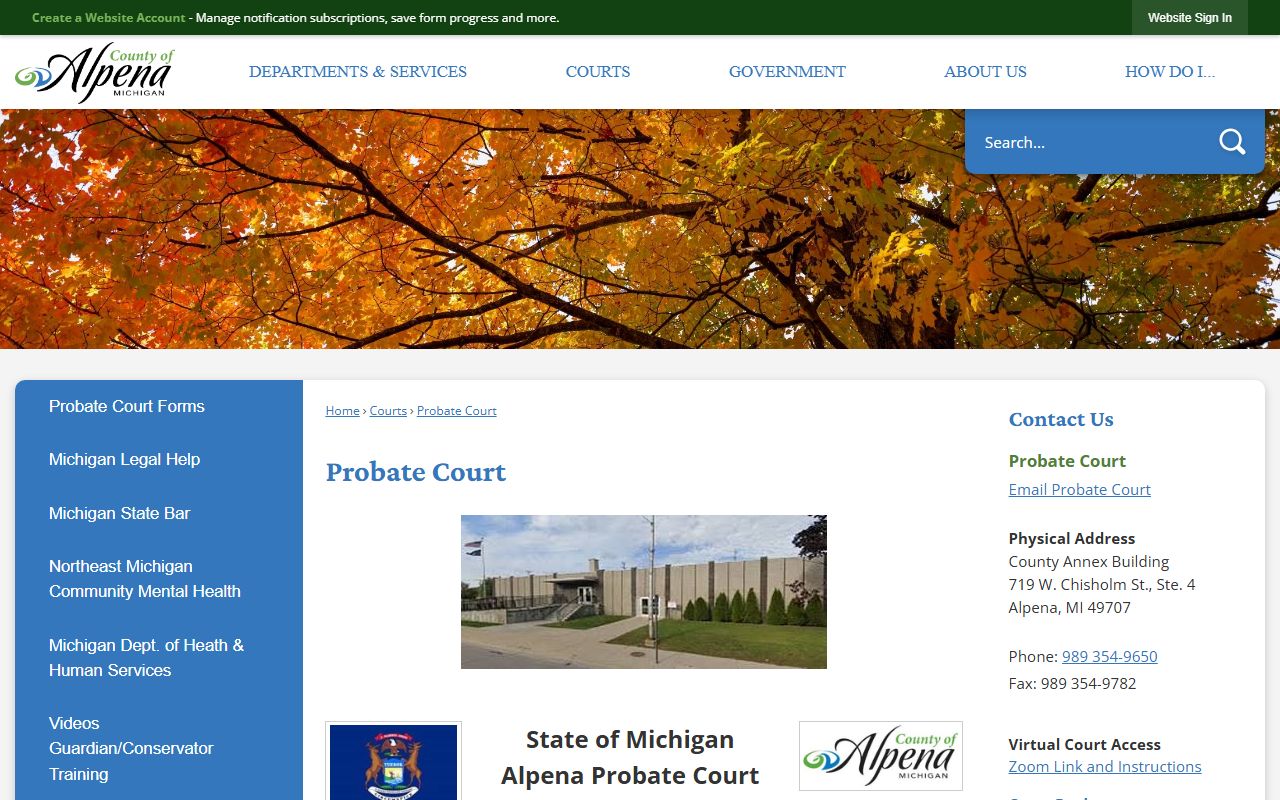
That page is the fastest way to confirm current hours and reach the docket before you drive downtown. A death often sets a probate case in motion, but the death certificate itself is a vital record ordered through the same channel that handles marriage and divorce records, not the probate case file.
The county treats its courts as one downtown campus with several suites on West Chisholm Street, yet each court keeps its own office and phone line. That layout matters for probate, because the estate file, the guardianship file, and any vital record that started the case can each sit with a different office just steps apart.
Probate Terms Defined
A handful of words show up again and again in probate paperwork. Knowing them helps you read a file and ask the right question at the counter. Court staff can explain what each word means in a case, but they cannot tell you how the law applies to yours.
- Testator
- The person who wrote and signed a will. After death, the will is offered to the Probate Court so a judge can admit it.
- Executor
- The person named in a will to carry out its terms. Michigan courts often call this role the personal representative.
- Intestate
- Dying without a valid will. State law then decides who inherits and in what share.
- Guardianship
- A court arrangement that gives one person authority over the personal care of an adult or minor who cannot decide alone.
- Conservatorship
- A court arrangement that gives one person control over another's money and property when that person cannot manage it alone.
How to Search Alpena County Probate Records
Probate files do not all live in one place, so the route depends on the case. Live and recent matters usually show on the court docket or through the statewide system, while older files stay on paper at the court office. Start by naming the case type, then pick the channel that fits it.
You can open the MiCOURT public case search directly to check for cases that appear online. The county's own Clerk of Court handles circuit-court files and vital records, but probate case files stay with the Probate Court, not the clerk.
- Identify the case type first: estate, will, guardianship, conservatorship, trust, or mental-health matter.
- Check the Probate Court docket link for live matters filed with the court.
- Search MiCOURT for probate cases that are published in the statewide system.
- Contact the Probate Court office for older paper files or certified-copy questions.
- Use the County Clerk only for clerk-owned certified copies, not for probate case files.
Bring as much detail as you can before you search or call. The full name of the person, an approximate date, and the case type all narrow a long list fast. If the file is older, the staff at the counter can tell you whether it lives on paper and how to view or copy it.
Note: MiCOURT does not display every probate matter, and some courts only show criminal cases sentenced within seven years, so a paper pull may still be needed.
Alpena Probate Court Office
The Probate Court keeps its own office, staff, and phone line inside the County Annex Building. Reach the register for docket questions, filing help, and certified-copy requests. Staff can explain procedure and point you to forms, but by county policy they cannot give legal advice or complete paperwork for you. The court says an attorney is not required, yet it cannot act as your attorney.
Alpena County Probate Court
County Annex Building
719 W Chisholm St, Suite 4
Alpena, MI 49707
989-354-9650
Fax: 989-354-9782
Mon-Fri 8:00 am-12:00 pm & 1:00 pm-4:30 pm
Court staff include Probate Register Liz Smigelski and Deputy Register Gillian Nye. Remote hearings run over a Zoom link posted with instructions on the court page, so many appearances no longer require a downtown trip. For filing procedure, the court also points the public to Michigan Legal Help, the State Bar of Michigan, and the official probate court forms.
Fees for Alpena County Probate Records
Costs fall into two buckets. Filing fees to open a probate case are set by Michigan statute and change with the case type, so confirm the current amount with the Probate Court before you file. Copy and search fees, on the other hand, are published by the county and are easy to plan for. The table lists the researched county fees for record copies and searches.
| Item | Fee |
|---|---|
| Record search, per individual | $15.00 |
| Certified copy of a court document | $10.00 |
| Each page of a copied document | $2.00 |
| Certified vital record copy (birth, death, marriage) | $16.00 |
| Each additional copy of the same vital record | $6.00 |
| Probate filing fees (estate, guardianship, conservatorship) | Set by statute; confirm with the court |
Note: A death certificate is a vital record ordered from the County Clerk, while the estate file that follows a death is held by the Probate Court, so the two carry separate fees.
What Alpena County Probate Records Show
An open probate file grows as a case moves. A decedent estate usually holds the admitted will, the order naming a personal representative, an inventory of assets, accountings, and the final orders that close the estate and distribute property. A guardianship or conservatorship file holds the petition, the physician or evaluation reports the court relied on, letters of authority, and periodic reports the fiduciary must file.
The county's guides on protective roles help explain what these files contain. Its plain-language page on what a conservator does lays out the money-management duties that generate the accountings you will see in a conservatorship record.
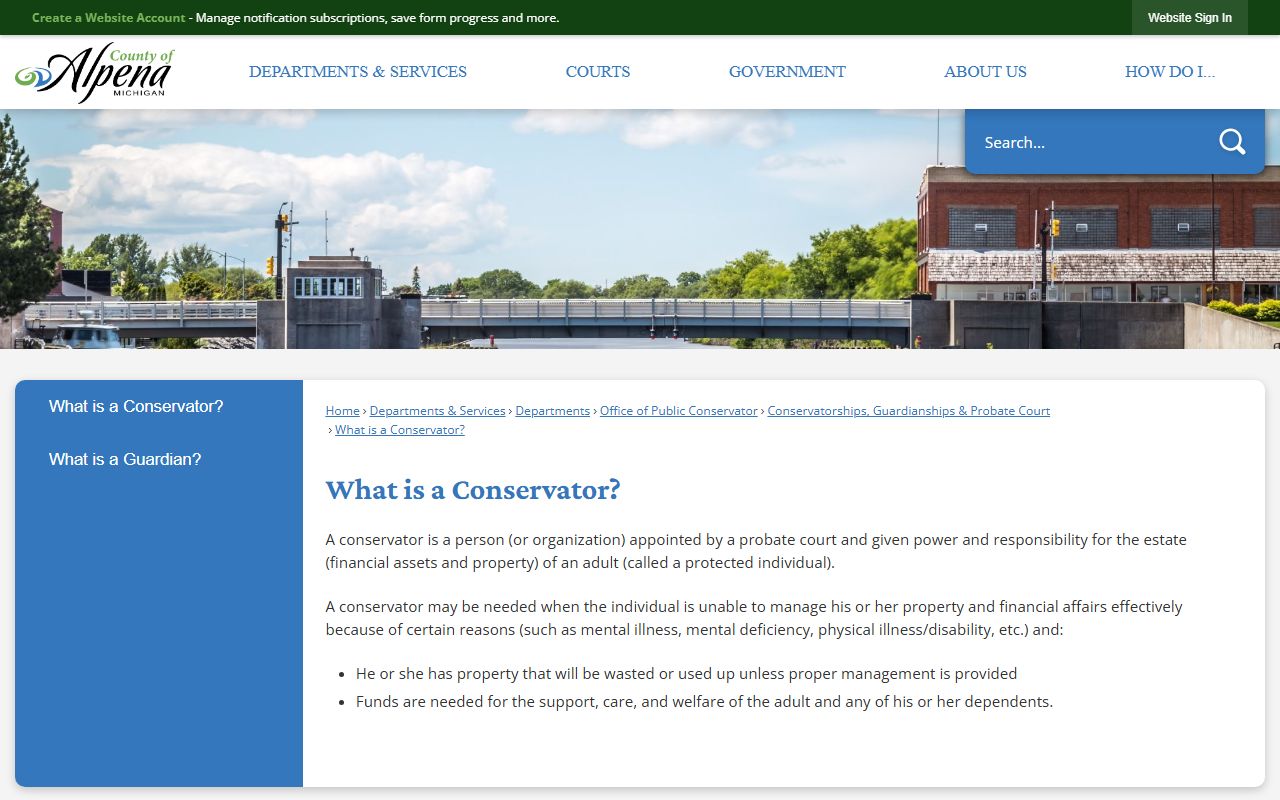
Because a conservator answers to the court for every dollar, the file tracks that oversight in detail. A will admission and a trust matter build similar paper trails. Once a will is admitted, the file shows the document itself, the proofs the court accepted, and the orders that follow. Trust disputes add petitions and the judge's rulings on how the trust must be run. Not every document is open, though, and the next section explains which matters the law keeps partly closed.
Restricted Alpena County Probate Records
Probate records are not automatically as open as a standard civil docket. The court publishes a mental-health FAQ precisely because those matters are sensitive and often partly nonpublic. A judge can explain the procedure, but staff cannot advise you on how to reach a sealed file. Guardianship files that involve a vulnerable adult, and any minor's file, get extra protection as well.
Juvenile matters follow their own rule. Michigan's juvenile nonpublic-record statute, MCL 712A.18e, controls when a juvenile record may be released.
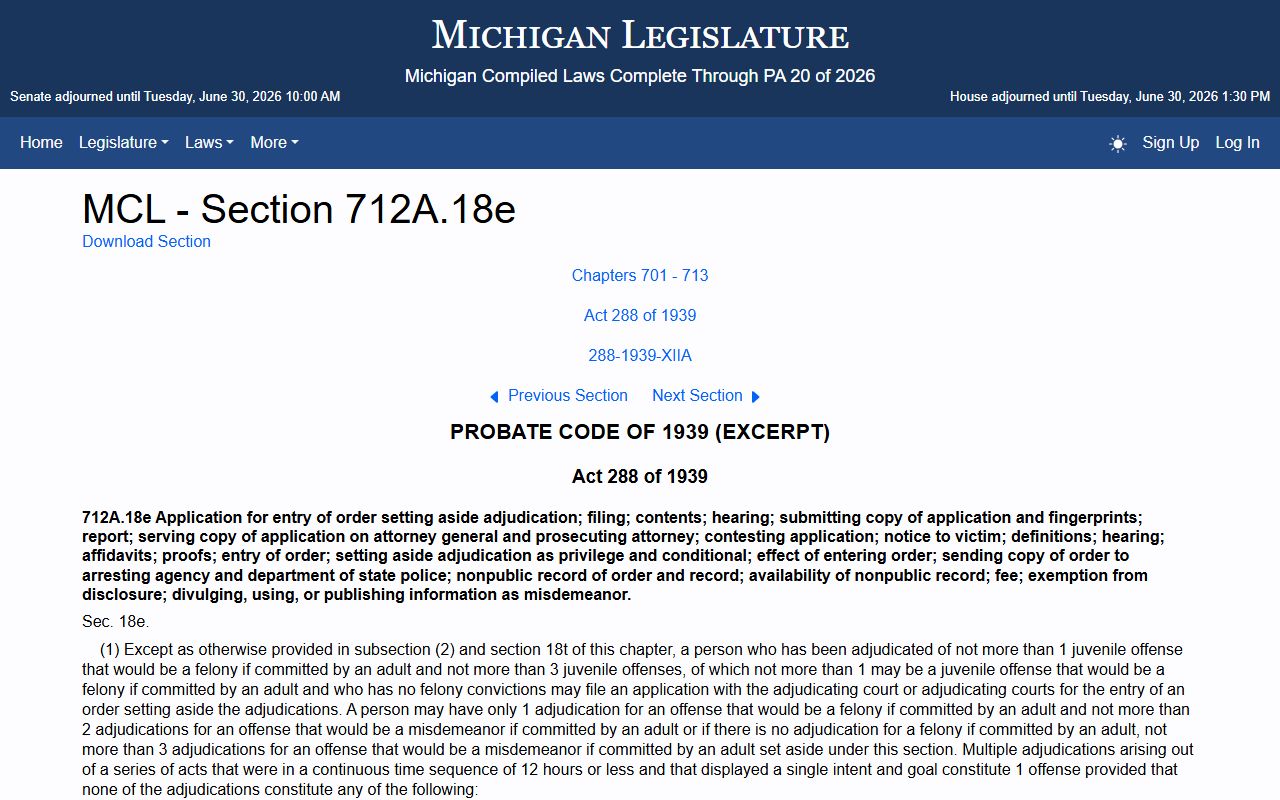
That statute is why a delinquency or protective file will not show up like an ordinary case. Adoption records are handled the same guarded way and usually require a court order or a specialized probate route to open.
Note: Social Security numbers, financial-account details, and minor-identifying information are typically redacted from probate files under the court rules and FOIA exceptions.
Public Conservator and Fiduciary Help
Alpena County runs support offices that sit right next to the probate system. When a person needs a conservator or guardian and no family member can serve, the county's fiduciary offices step in. These offices do not replace the court, but they carry out the roles the court appoints and they answer common questions before a family ever files.
The county describes its dedicated support office on the Office of Public Conservator page.
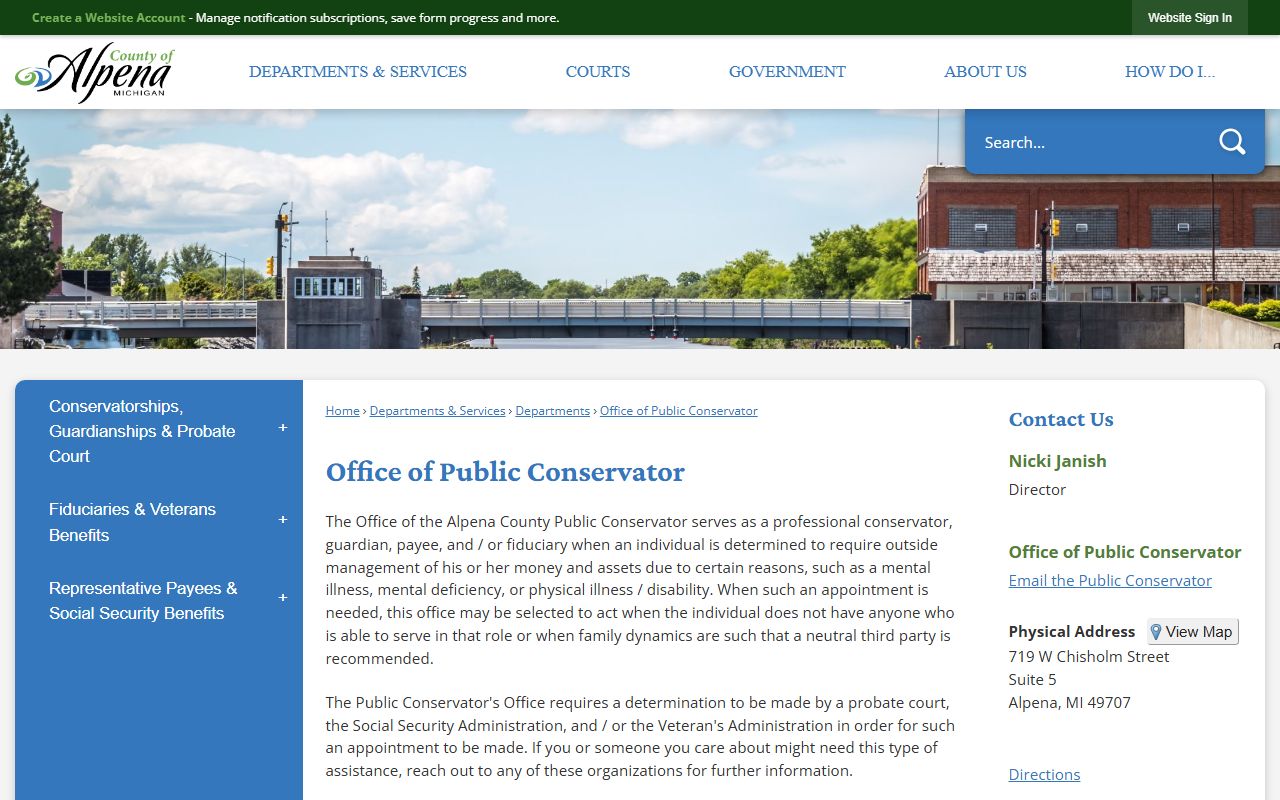
That office serves as a county fiduciary for probate-adjacent work when no one else is available to act. A related team focuses on veterans and the benefits many older residents rely on.
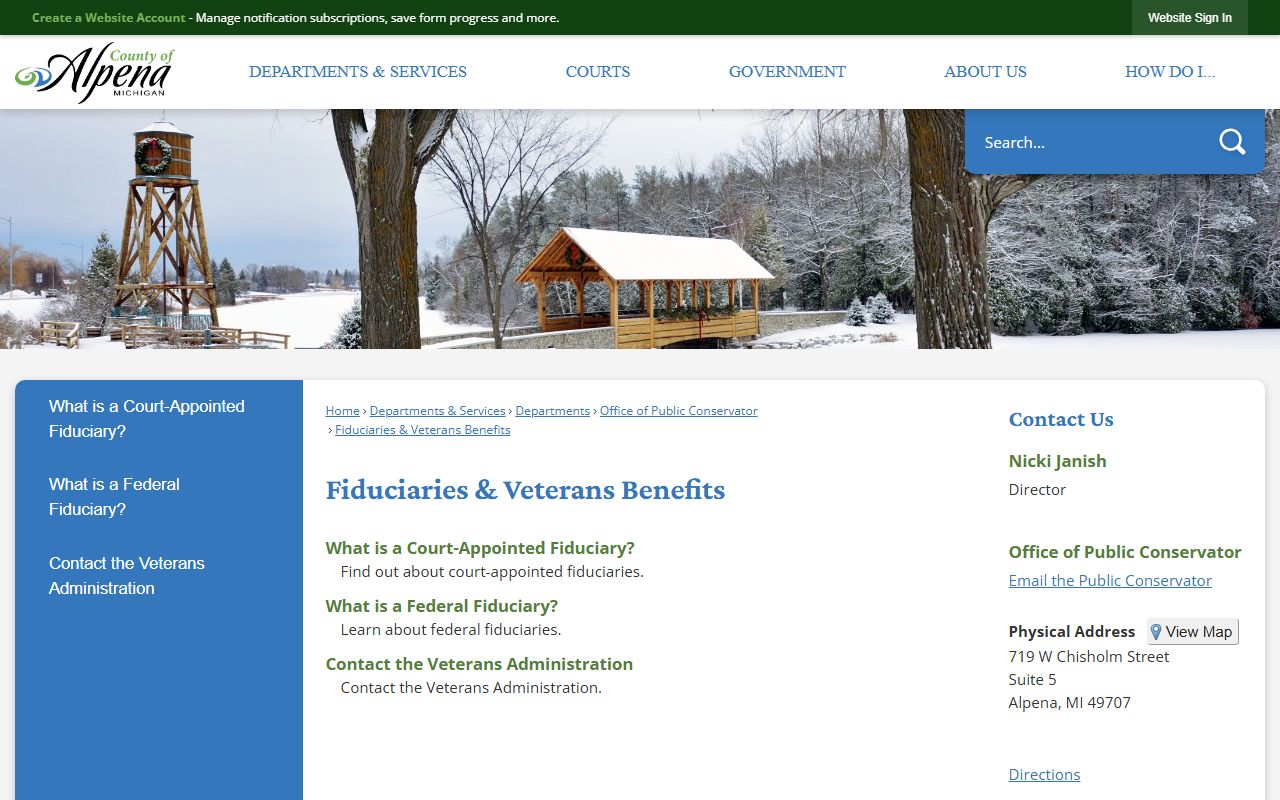
The county's Fiduciaries and Veterans Benefits page explains how a court-appointed fiduciary manages funds for a protected person.
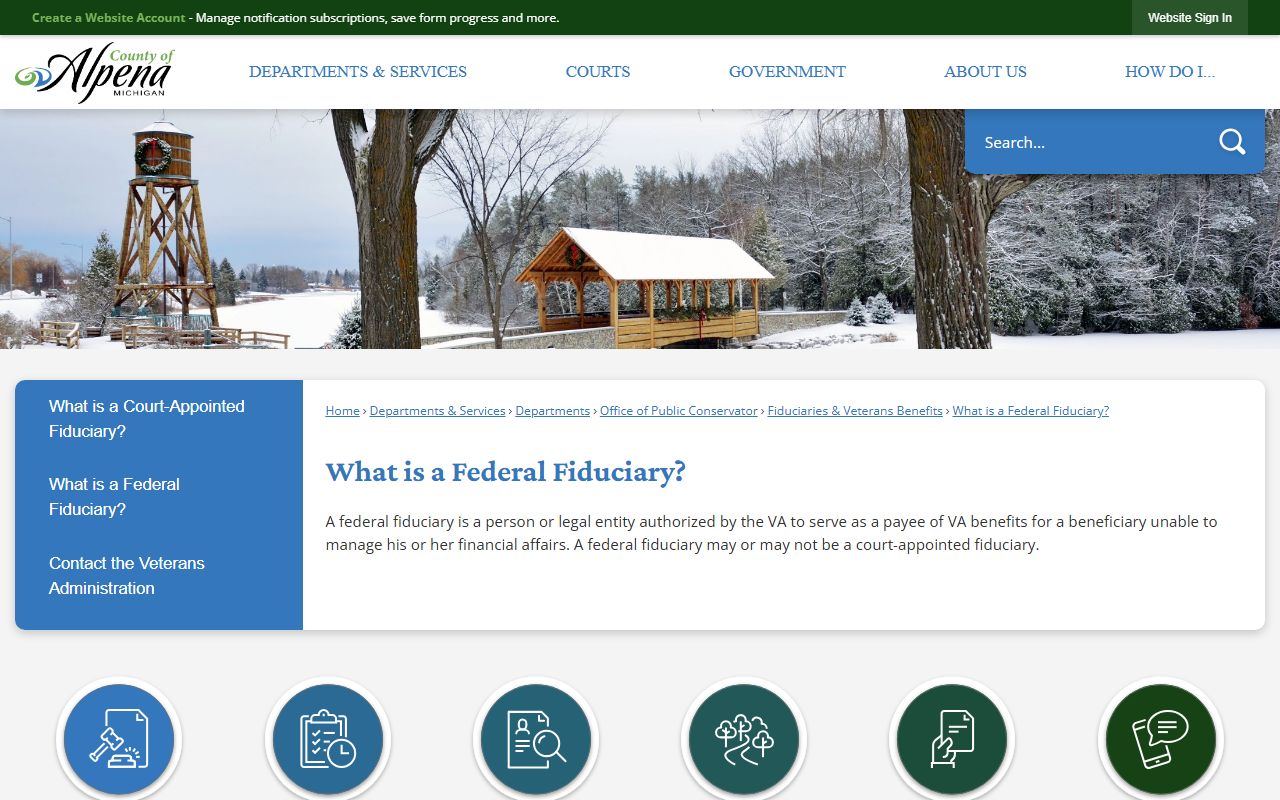
Some of that fiduciary work ties into federal benefit programs. The county's page on the federal fiduciary role spells out how a fiduciary handles VA payments for a beneficiary who cannot manage them.
Together these offices round out the county's probate picture, from the courtroom to the day-to-day care of a protected person's money and health.