
Alpena County Arrest Records and Court Charges
An Alpena County arrest record is the account of an arrest itself. It shows who was taken into custody, which agency made the arrest, and the booking that logs the person into the county jail. Booking data can include the arrest date, the arresting agency, a booking number, a warrant number, a bond amount, and the charges listed at intake. An arrest, though, is not a charge. After the arrest, the county prosecutor reviews the police report and the evidence, then decides the formal charges. Those charges are filed with the court clerk, and that filing becomes the court charge record.
Two records grow from the same event. The arrest and booking side lives with the sheriff and the jail, where the county roster tracks who is held, the bond, and the booking detail. That jail-roster view is covered on the inmate records page. The court charge record is the prosecutor's side: the court charges after arrest, the charging document, and each charge's status as the case moves. The full case file, with pleas, disposition, and sentence, sits on the criminal court records page. Reading both together gives the complete picture.
How to Find Alpena County Arrest Records
Most people start online. Alpena County routes court searches through a single case-search link that connects to Michigan's statewide MiCOURT system. Charges and charge status appear there once a case is filed. The arrest and booking side, by contrast, lives on the county jail roster, which lists who is currently held. Use the court search for charges. Use the jail roster for booking detail.
- Open the Alpena County court case search, which connects to the MiCOURT public portal.
- Search by the defendant's full name, or by case number if you have it.
- Open the matching case and read the list of charges that were filed.
- Check each charge for its statute code, its level, and its current status.
The county prosecutor also keeps a public routing tool for anyone tracking a case. The office's Find Case Status page directs victims and defendants to the correct contact for a specific matter.
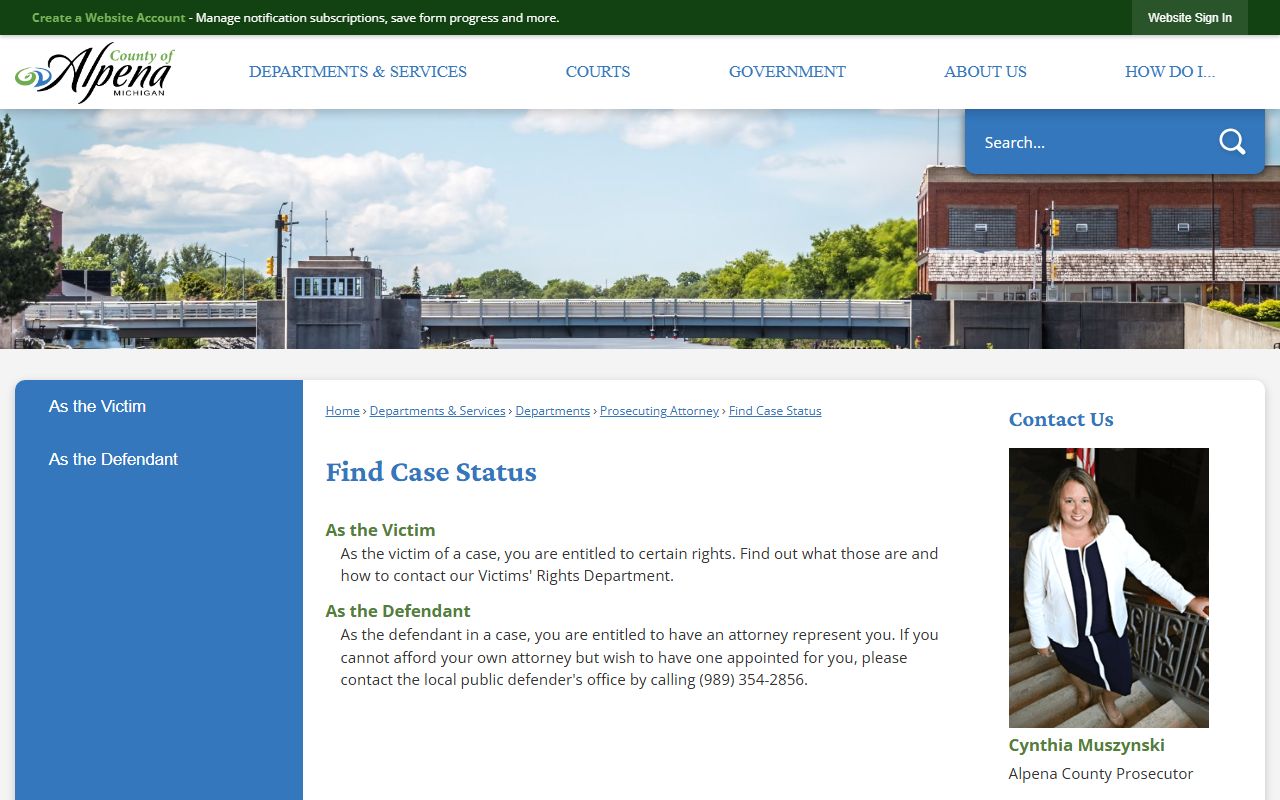
That page is the fastest way to confirm whether a charge has moved, been amended, or been resolved since the arrest. Note: some Michigan courts only display criminal convictions when sentencing occurred within seven years of the search, so older charges may need staff help.
How Alpena County Charges Get Filed
The charge record begins with a document. After booking, the prosecutor files a formal charging paper that tells the court what crimes are alleged. In Alpena County, the elected prosecutor, Cynthia Muszynski, leads the office that reviews each arrest and files those charges. Michigan adult criminal cases start in district court, and felonies later move to circuit court. The charging document sets the charges, the statute cited, and the level of each count. Three main types appear in county records, and the one used depends on the offense.
| Complaint | Information | Indictment | |
|---|---|---|---|
| Filed By | Officer / Prosecutor | Prosecutor | Grand Jury |
| Common For | Misdemeanors | Many felonies | Serious felonies |
| Starts | The case | The case | The case |
After the document is filed, the charges are read at an arraignment, the first court appearance. For a felony, the district court then holds a preliminary exam to test probable cause. If the judge finds enough proof, the case is bound over to circuit court, where the felony charges continue. A misdemeanor usually stays in district court from start to finish. The charge record follows the case through each of these steps.
Charge Codes and Severity Levels
Every charge points back to a statute. A charge code ties the count to a specific Michigan law, so the record shows not just a label like assault but the exact section alleged. Codes also carry a level. Michigan sorts offenses into felonies, misdemeanors, and civil infractions, and the level decides which court hears the case and how serious the penalty can be. One arrest can produce several separate charges, each with its own code and level, so a single booking may list multiple counts.
A serious felony charge, once it ends in a conviction and a prison sentence, can send a person into the state corrections system rather than the county jail. Michigan's Department of Corrections describes that system, including the vocational programming that earned national recognition.
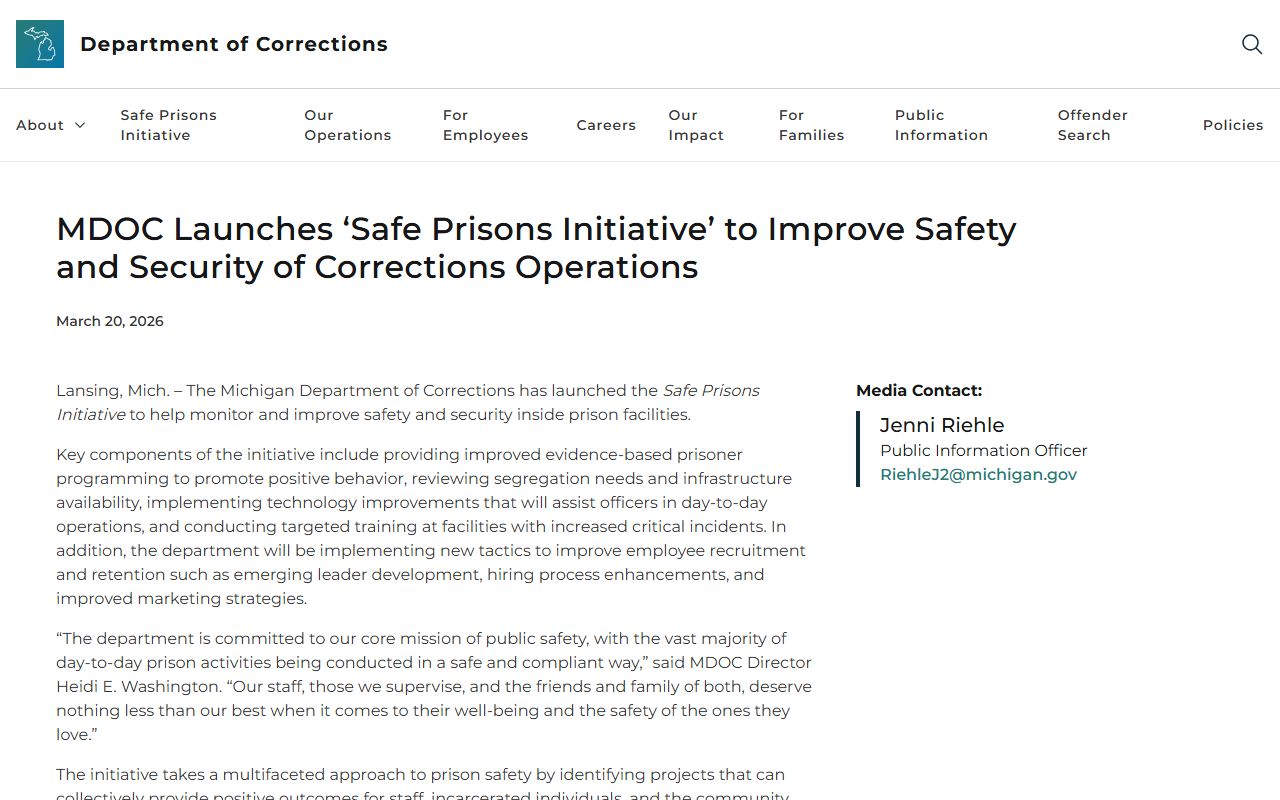
The distance between a charge and that outcome is wide, which is why a charge level alone never tells the whole story. Note: a booking sheet may list a high-level charge that the prosecutor later files at a lower level, or does not file at all.
Charge Status in Alpena County Records
Charges rarely stay frozen. As a case develops, the prosecutor can amend a charge, reduce it, add a new count, or drop it. The record tracks each change, so a charge listed at booking may read differently weeks later. The status field is where those shifts appear. A few terms come up again and again.
| Status | What It Means |
|---|---|
| Pending | The charge is active and the case has not been resolved. |
| Amended / Reduced | The charge was changed, often to a lesser count. |
| Dismissed | The court dropped the charge, ending it without a conviction. |
| Nolle Prosequi | The prosecutor chose not to pursue the charge. |
Statewide Criminal History and Charge Lookups
County records show local charges, but charges also roll up into a statewide history. Michigan State Police runs the state's criminal history record system, which gathers arrests and charges reported by agencies across Michigan. That statewide file is broader than any single county docket. The state explains the record and how to request it on its criminal history records page. For people already sentenced to prison, a separate system tracks custody after the county case ends.
The Michigan Department of Corrections runs OTIS, the statewide offender tracking tool, and publishes an overview of its prisons and custody operations.
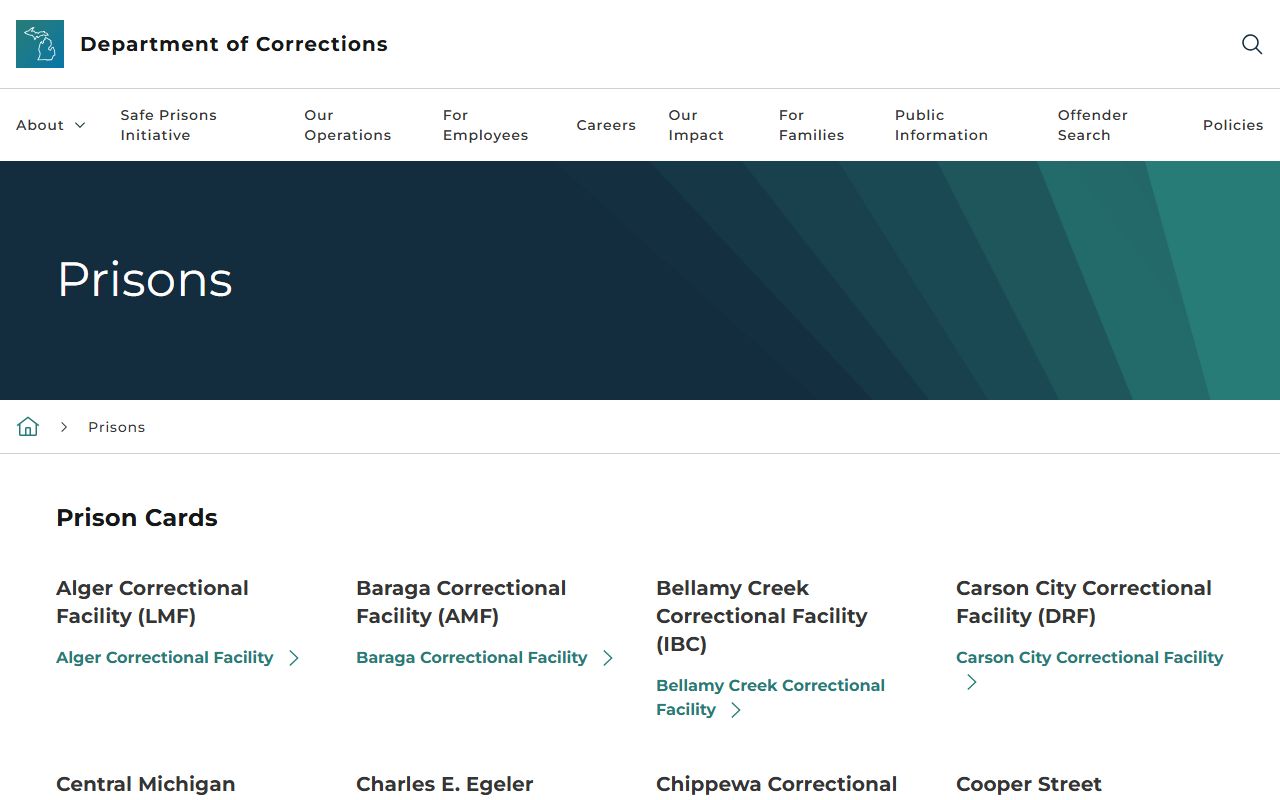
OTIS covers prisoners, parolees, and probationers under state supervision, while the county jail roster covers only local custody. A person can move from the county roster to OTIS once a felony conviction leads to a state sentence.
Charges vs. Convictions
Being charged is not the same as being convicted. A charge is an accusation. It means a prosecutor believes there is enough evidence to bring the case, not that a court has found the person guilty. A conviction comes later, only after a plea or a verdict. This difference matters when reading any Alpena County arrest record, because a public charge can end in dismissal, acquittal, or a reduced plea.
| Charge | Conviction | |
|---|---|---|
| Stage | Accusation | Verdict or plea |
| Burden of Proof | Probable cause | Beyond reasonable doubt |
| Public Record | Yes | Yes |
A conviction that carries a prison term places a person under the care of state corrections staff. The department recently marked a new class of Upper Peninsula corrections officers graduating.
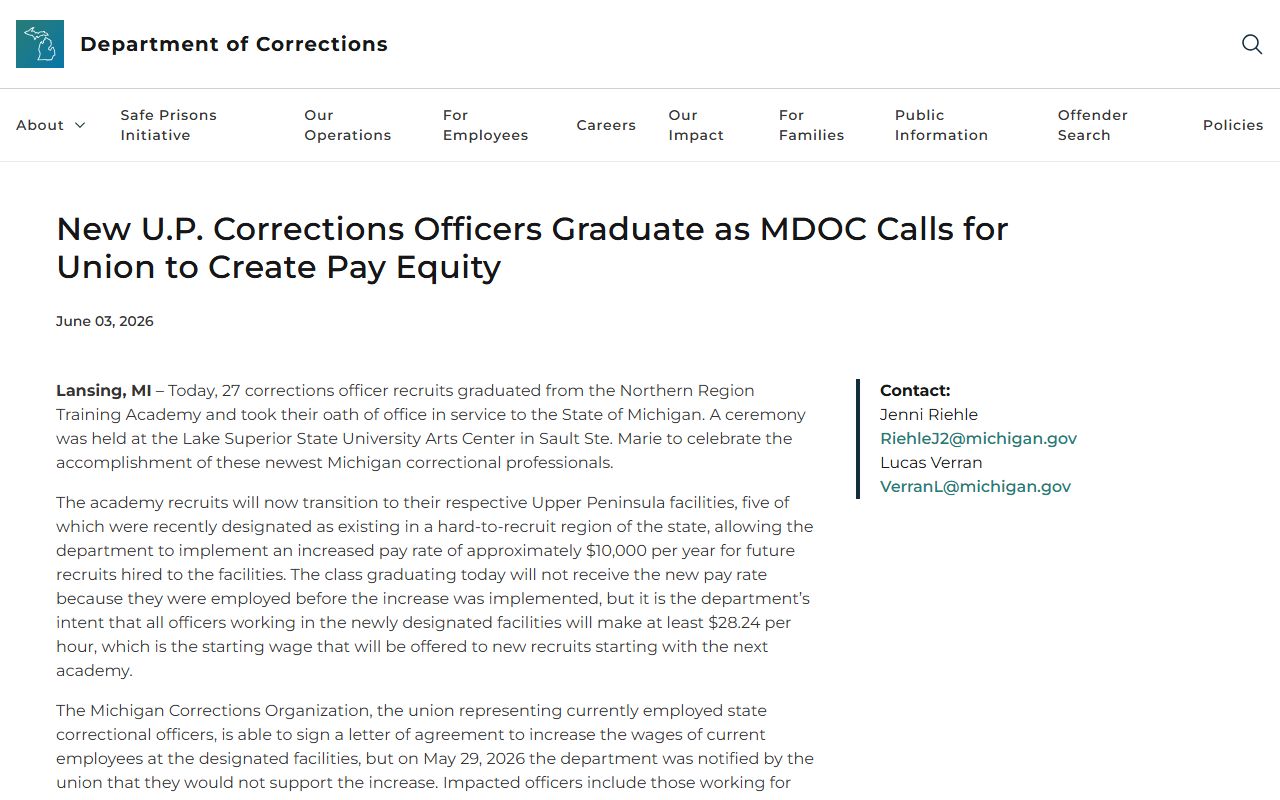
Only convictions, not charges, lead to that stage. That is the core reason charges and convictions must be read as separate facts on any record.
Background Checks and Alpena County Charges
People run charge lookups for many reasons. Landlords, employers, and the simply curious all search the same records. There is a legal line, though, between a casual public-record search and a formal background check. Checks used for hiring, housing, or credit fall under the federal Fair Credit Reporting Act, which sets accuracy and permission rules. A quick look at a county docket does not carry those protections, and it can miss updates, sealed matters, or later corrections.
Official agencies keep their own public updates, such as the Michigan Department of Corrections press release archive.
Primary sources like these are more reliable than second-hand summaries when a charge or a custody status is in question.
Important: This site is not a consumer reporting agency under the FCRA, and its information may not be used for employment, housing, credit, or other regulated screening.
Sealed vs. Expunged Charge Records
Not every charge stays public forever. Michigan law lets certain convictions be set aside, and the state's Clean Slate rules make some set-asides automatic. A sealed record is hidden from public view. An expunged record is treated as if it never existed. Both remove the matter from ordinary search results, though eligibility and process differ. The main set-aside statute, MCL 780.621, governs who qualifies and how to apply.
| Sealed | Expunged | |
|---|---|---|
| Visibility | Hidden from public | Treated as never existed |
| Law Enforcement | Limited access | Very limited |
| Eligibility | Varies by case type and court order | Set by MCL 780.621, with waiting periods |
Restricted Charge Records in Alpena County
Some charge records are withheld from the start. Juvenile charges are treated differently from adult cases under Michigan law, and many are nonpublic. Sealed and set-aside convictions drop out of public search. Charges tied to an open investigation may be held back until the case is filed. Dismissed charges sometimes stay visible, and sometimes do not, depending on the order. When a record does not appear, county staff can explain whether it is restricted or simply not yet online.
State agencies also limit some custody information for safety reasons. The Department of Corrections has described that focus in its Safe Prisons Initiative announcement.

Restrictions on both the court and the custody side mean a public search will not always show every detail tied to an arrest. Note: when a charge is restricted, sealed, or expunged, the county clerk or prosecutor can confirm its status but cannot give legal advice about it.