
Criminal Court Records in Alpena County
A criminal court record is the case file the court opens once formal charges are filed. It is far more than a note that someone was arrested. The file collects every step the court takes, including the charges as written, the arraignment, each plea, the motions, the hearings, and the final judgment. Clerks index each case by number and name, then keep the record long after the case ends. When people ask for arrest charges or court charges, this case-level file is usually what they mean.
Adult criminal cases in Alpena County start in the 88th District Court, no matter how serious the offense. The district court handles arraignments, warrants, and the preliminary exam. Misdemeanors stay there through sentencing. Felonies and serious misdemeanors move to the 26th Circuit Court after bindover, and every felony case is filed with the County Clerk's Office. For a closer look at the charges themselves, the companion page on arrest records and court charges breaks down each count and its status.
Search Alpena County Criminal Records
The main search tool is MiCOURT, the statewide public case search the county links from its Court Case Search page. It can return civil, traffic, criminal, domestic, and probate cases, depending on the court. One warning matters here. Some courts only display case numbers and criminal convictions when sentencing occurred within seven years of the search date. Older convictions may not surface online even when the file still exists.
- Open the state MiCOURT case search portal and clear the security check.
- Search by the defendant's full name, or by case number when you have it.
- Narrow the results by court, case type, and date range.
- Open the case to read the docket, the charges, and the disposition.
- Request a certified copy from the clerk when a file is old or missing online.
Statewide criminal history is a separate file. The Michigan State Police run ICHAT, the online Criminal History Access Tool, which pulls felony and serious misdemeanor convictions from across the state. The prosecutor's office also offers a case-status channel for victims and defendants. Victims and defendants can use the county Find Case Status page to follow an active matter.
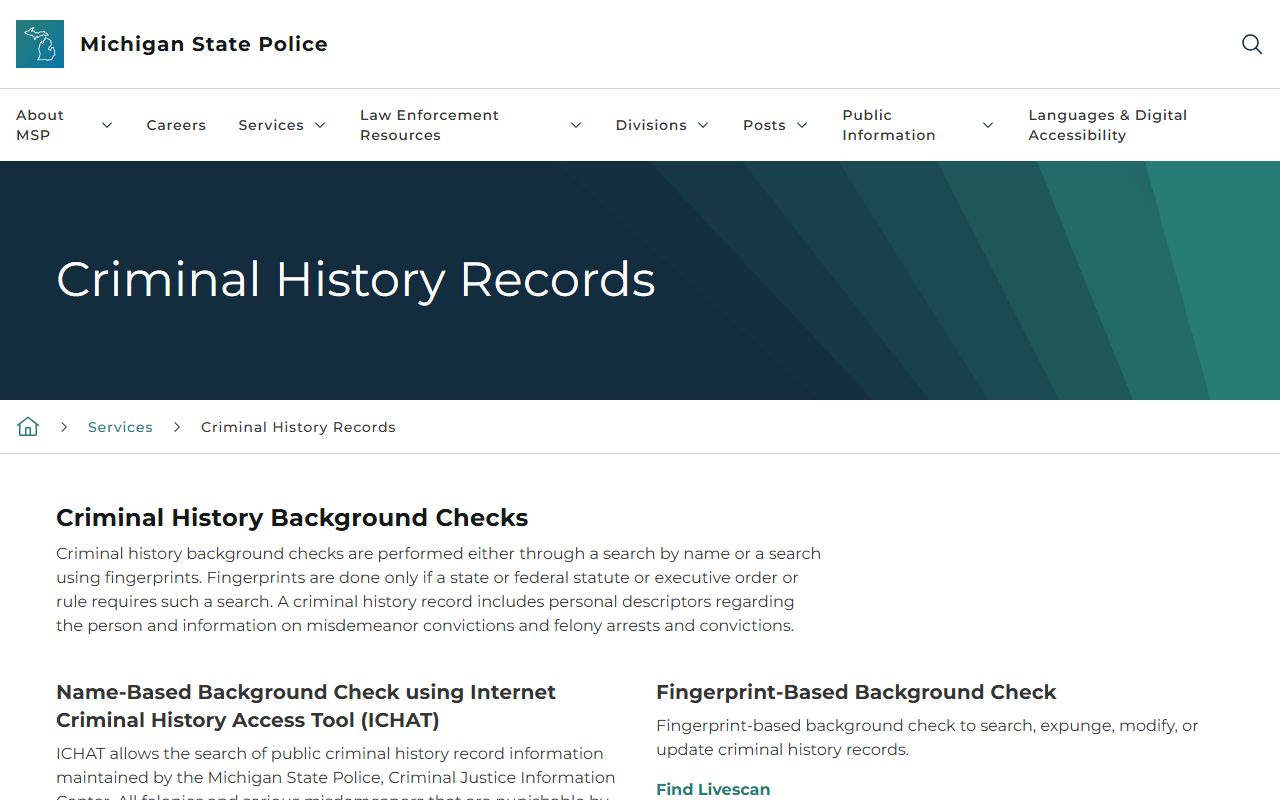
The Michigan State Police criminal history page explains ICHAT and what a statewide record covers. That statewide record reaches beyond a single county, so it is the better tool when a person may have cases in more than one court.
Note: Older convictions may not appear in MiCOURT because the public window can stop at seven years from the sentencing date.
How Alpena County Criminal Cases Move
A criminal case follows a set path, and each step leaves its own mark in the record. Michigan routes felonies through two courts. The district court takes the first steps, then the circuit court takes the case after bindover. The docket shows each stage in order, so the file reads almost like a timeline once you know the labels.
Case flow: Charges Filed › Arraignment › Preliminary Exam › Bindover to Circuit › Plea or Trial › Disposition › Sentencing
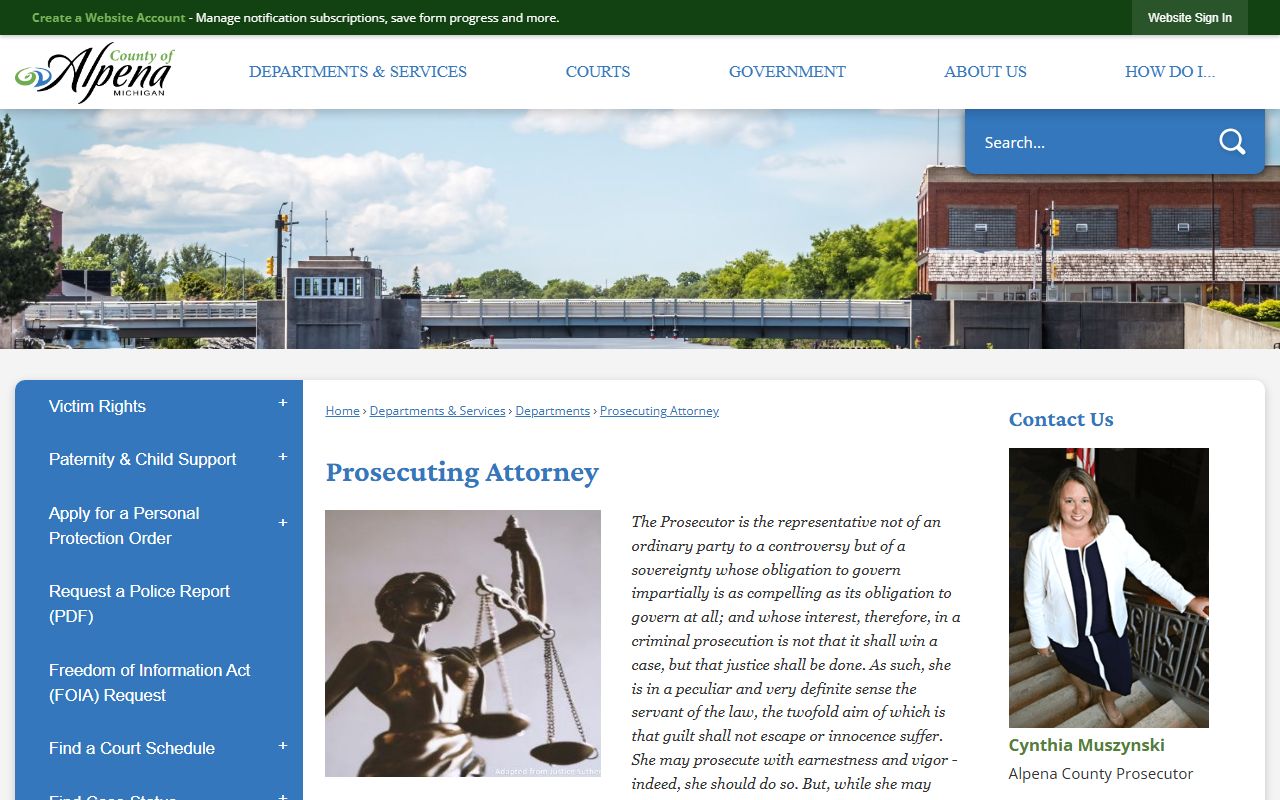
The prosecutor drives the charging side of that flow. The office files the charges, manages the case, and routes victim-rights and case-status questions. A look at the county Prosecuting Attorney page shows how that office fits into the process. Every entry the prosecutor files, from the first complaint to a later amendment, lands in the court record for the case.
The table below maps each stage to what the court does and where it shows up in the file.
| Stage | What Happens |
|---|---|
| Arraignment | The first appearance. The court reads the charges and sets bond in the district court. |
| Preliminary Exam | A district-court hearing on whether there is probable cause to send a felony forward. |
| Bindover | The transfer that sends a felony from the 88th District Court to the 26th Circuit Court. |
| Plea or Trial | The defendant pleads, or a judge or jury decides guilt after the proofs. |
| Sentencing | The punishment phase after a conviction, entered as the final judgment. |
What Alpena County Criminal Records Show
Open a criminal file and the same core fields appear again and again. The public court display lists party name, hearing info, case number, and a control number. Behind that, the case docket carries the charges, the pleas, the motions, and the judgment. Full Social Security numbers stay hidden, and juvenile or sealed matters are limited or absent. The field guide below covers the parts readers ask about most.
| Field | What It Shows |
|---|---|
| Case Number | The court's index for the file. Related columns include CTN, control number, and warrant number. |
| Defendant | The person charged, listed by full name and often known aliases. |
| Charges | Each count as filed, tied to a statute, with its level and current status. |
| Plea | How the defendant answered each charge, such as guilty, not guilty, or no contest. |
| Disposition | How the case ended for each count, such as a conviction, dismissal, or acquittal. |
| Sentence | The penalty after a conviction, including jail, probation, fines, and conditions. |
The county does not publish one simple case-number formula. The public displays use case number, CTN, control number, arrest number, and warrant number in different spots. A full sweep of all Alpena County court records can help when a case crosses more than one court or division.
Charges vs. Convictions
A charge is not a conviction. Being charged only means the prosecutor believes there is enough cause to bring a case. A conviction comes later, and only if a plea or a verdict settles the matter against the defendant. A criminal court record can show charges that were dropped, dismissed, reduced, or that ended in acquittal. Reading the disposition for each count is the only sure way to tell one from the other.
| Charge | Conviction | |
|---|---|---|
| Stage | Accusation | Verdict or plea |
| Burden of Proof | Probable cause | Beyond reasonable doubt |
| Public Record | Yes | Yes |
Reading Dispositions and Sentences
The disposition is the line that tells you how a case ended. Common results include guilty, not guilty, dismissed, and nolo contendere, which is a no-contest plea. Some cases end in a deferred or delayed outcome, where the court holds judgment while the defendant meets conditions. The sentence follows a conviction and can mix jail time, probation, fines, and terms such as counseling or reporting. A few legal terms unlock most of the file.
- Arraignment
- The first criminal appearance, where the court reads the charges.
- Preliminary exam
- A district-court hearing on felony probable cause.
- Bindover
- The transfer of a case from district court to circuit court.
- Disposition
- How the case ended, count by count.
- Sentencing
- The punishment phase after a conviction.
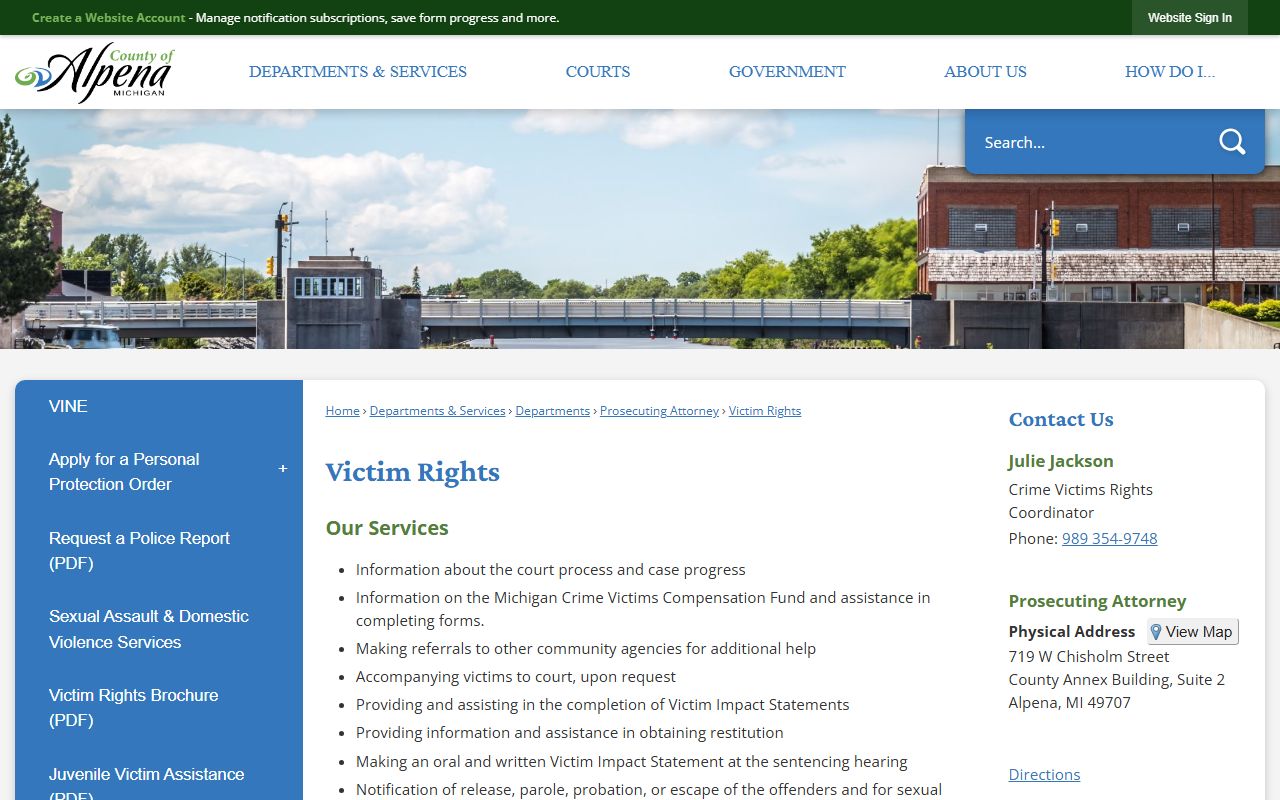
Victims have a defined role once a case reaches disposition. The county Victim Rights office handles notice and support tied to the outcome and sentence. That office sits on the prosecutor side of the case, and its work is often visible in the record as notices and hearing entries.
Sealed vs. Expunged Criminal Records
Sealing and expungement are not the same thing, though people mix them up. A sealed record is hidden from the public but can still be reached in limited ways. An expunged, or set-aside, conviction is treated as if it never happened for most purposes and drops out of public view. In Michigan the practical route is the set-aside. A conviction that is set aside cannot be seen by the public.
| Sealed | Expunged | |
|---|---|---|
| Visibility | Hidden from public | Set aside and treated as if it never existed |
| Law Enforcement | Limited access | Very limited access |
| Eligibility | By court order in specific case types | Eligible convictions under Michigan's set-aside law |
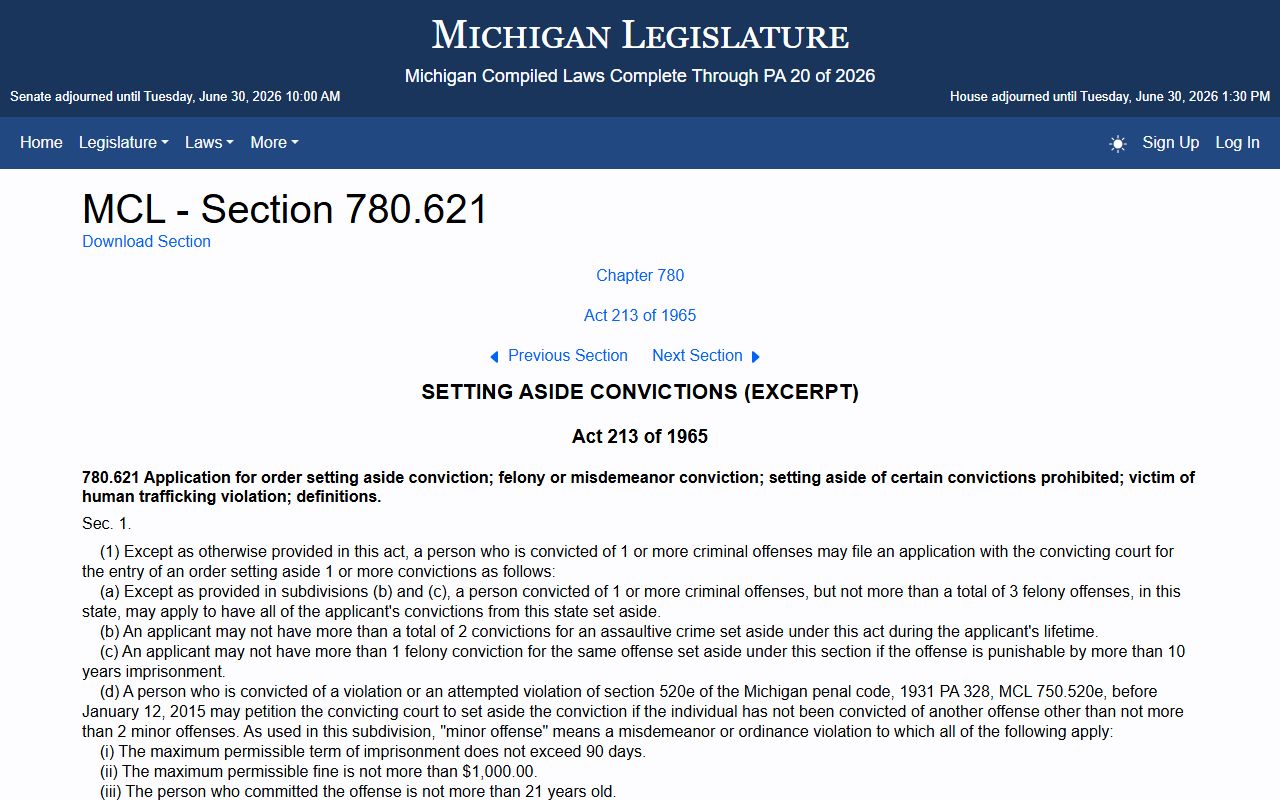
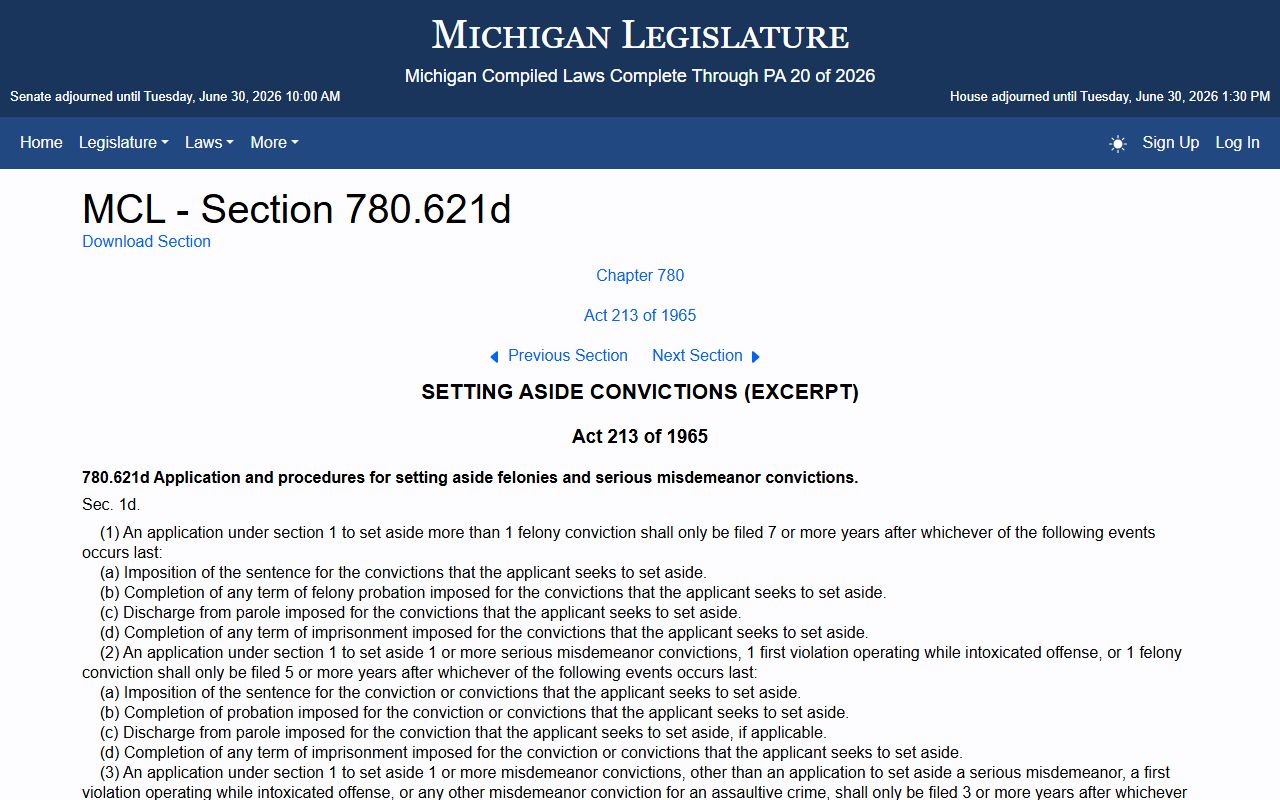
Michigan's set-aside law is the tool most residents use. The core statute, MCL 780.621, lets certain convictions be set aside so they are no longer public. The application procedure statute, MCL 780.621d, covers how and when to apply. The standard adult application uses the courts MC 227 form and carries a $50 filing fee. Marijuana-related applications use a different form and may have no fee.
The steps below outline the standard adult set-aside path. Read them as a general map, not legal advice.
- Pull your record from ICHAT or the court.
- Confirm which convictions are eligible.
- Complete the MC 227 form, or the marijuana variant when it applies.
- File the packet with the court, pay the $50 fee, and mail copies as required.
- Attend the hearing if the court schedules one.
Michigan's Clean Slate laws also make some set-asides automatic, with no application at all. The timing rules in MCL 780.621d and the automatic provisions work together to clear eligible records over time.
Note: An expungement question is a public-record question as much as a criminal-law one, since a set-aside changes what shows up in a search.
Public Access to Alpena Criminal Records
Michigan treats court records as open by default, but not every file is handled the same way. Public records are generally open under the state Freedom of Information Act, and court files are also governed by the Michigan Court Rules. For Alpena County, the rule of thumb is simple. Circuit-court files, including all felonies, are requested through the County Clerk's Office. District-court traffic and criminal matters run through the 88th District Court. Older, sealed, juvenile, or expunged records usually need staff help or a formal request.
Key Statutes:
Michigan Code § MCL 15.233 - gives a person the right to inspect, copy, or receive copies of public records.
Michigan Court Rule 8.119 - governs how Michigan court records are kept and released, apart from FOIA alone.
The County Clerk's Office is the named office for circuit-court files and older file pulls. Staff there can search by name, alias, and date range when a case does not surface online.
Background Check Considerations
A casual name lookup and a formal background check are not the same. A quick MiCOURT search is fine for personal curiosity or to confirm a hearing date. A background check used for hiring, housing, or credit is regulated and must follow strict federal rules. For those uses, an FCRA-compliant service and a statewide criminal history through ICHAT carry more weight than a single-county glance.
Important: This site is not a consumer reporting agency under the Fair Credit Reporting Act, and its records may not be used for credit, employment, tenant, or insurance decisions.
Restricted Criminal Records in Alpena County
Some criminal matters never reach the public search, and others drop out over time. Juvenile delinquency and child-protective cases are treated apart from adult files. Michigan's key juvenile nonpublic-record statute, MCL 712A.18e, limits who may see many of those records. Sealed cases, set-aside convictions, and ongoing matters can also be withheld, and full Social Security numbers stay redacted throughout.
- Juvenile delinquency and child-protective files, limited under MCL 712A.18e.
- Convictions set aside under Michigan's Clean Slate and set-aside laws.
- Ongoing investigations and some warrant-related entries.
- Adoption and sensitive mental-health matters routed through probate court.
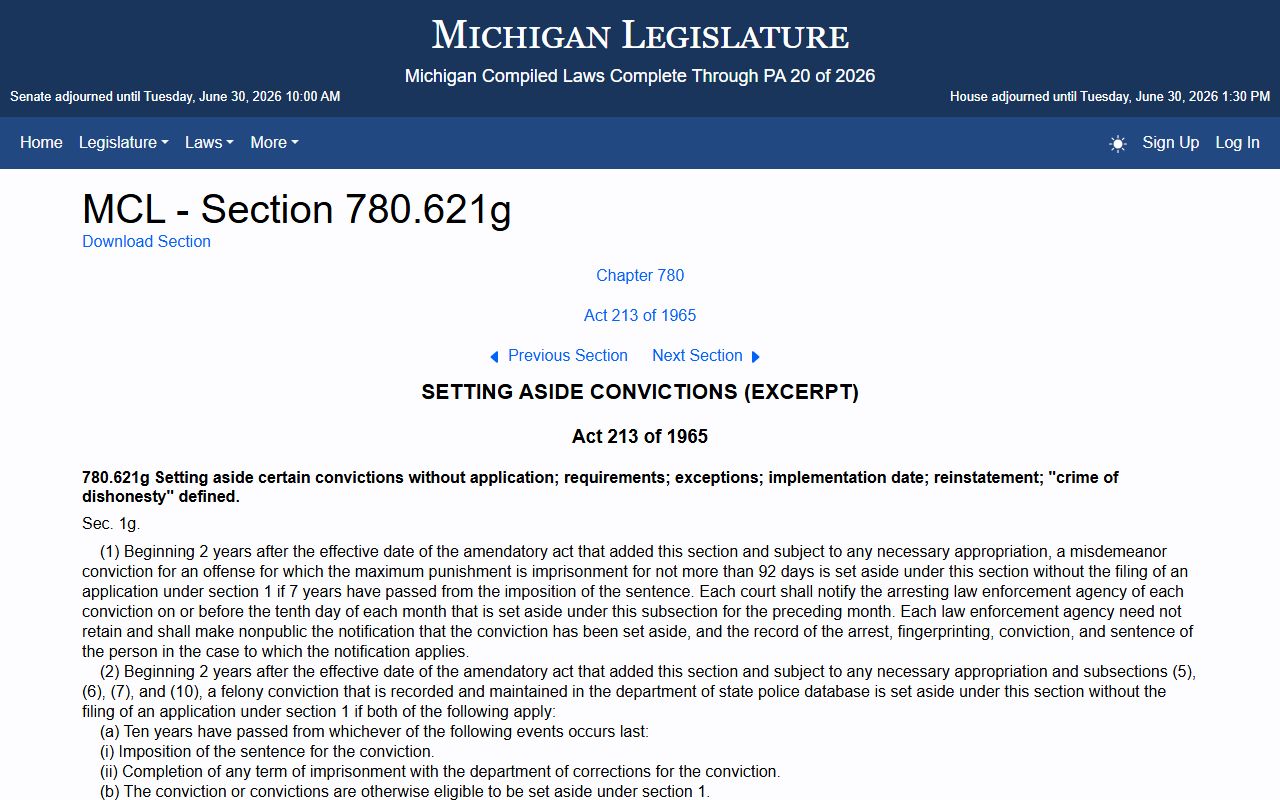
Automatic clearance is now part of the picture. The automatic set-aside provisions in MCL 780.621g move eligible convictions to nonpublic status without a filing. Once a record is set aside, it should no longer appear in a routine public search, even when the underlying case once did.
Note: A record that is old, sealed, juvenile, or expunged usually calls for a formal request route rather than the public online search.